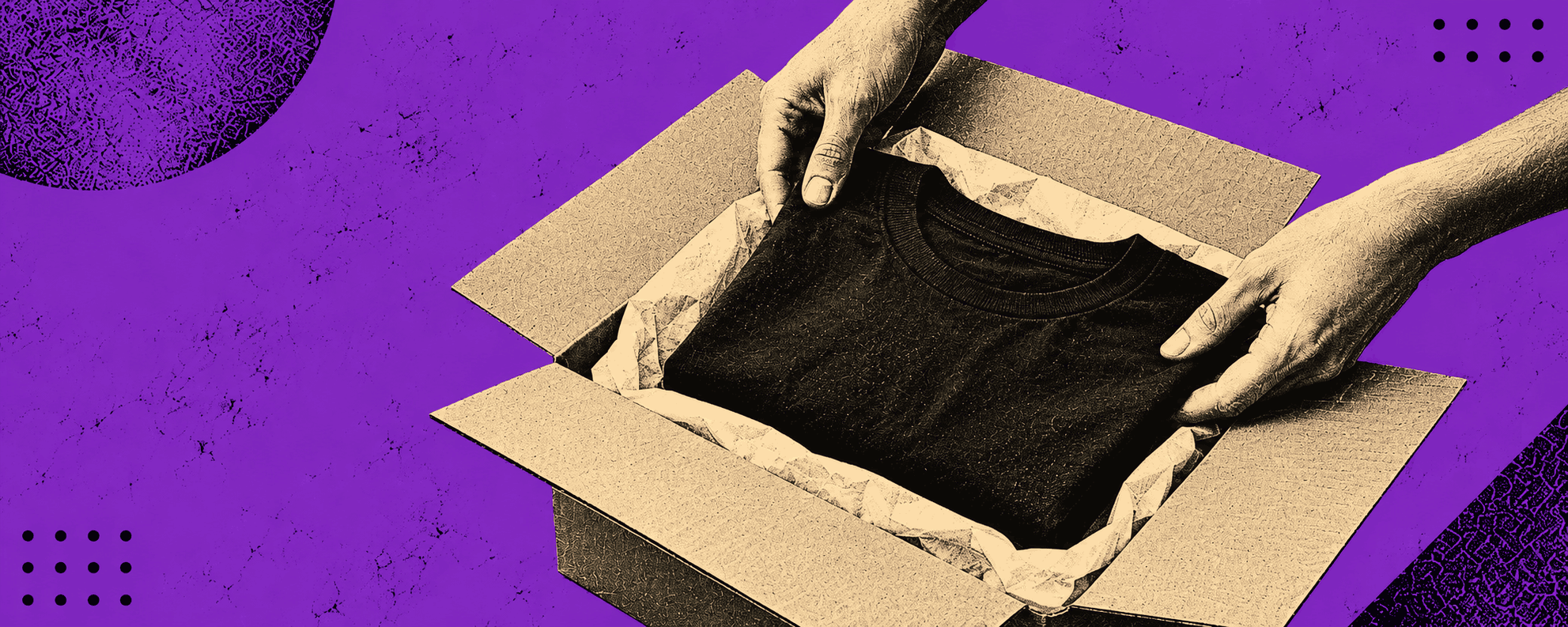
Fold a black T-shirt in medium and the same shirt in large, slide each into a clear bag, and set them side by side. Without the size sticker, few people could tell them apart, and on a busy afternoon neither can a picker. That is apparel in a nutshell: products that look identical but are not interchangeable, bought by shoppers who often plan to send something back.
Handing that work to a third-party logistics provider (3PL) changes more than who tapes the boxes. Seen up close, how a 3PL improves apparel fulfillment comes down to how sizes are counted, where they sit on the shelf, and what a return is worth to you.
TL;DR
- In apparel, the unit you track is the size and color, not the style, so even a small line becomes dozens of SKUs.
- A good 3PL checks size breakdowns at receiving, stores look-alike sizes apart, and turns size returns into quick exchanges.
- A size return is a second chance at the sale. A wrongly sent item is the brand’s own mistake, and much harder to win back from.
- Someone who inspects the returned garment can tell a true fit problem from a factory labeling mistake.
Apparel Fulfillment Definition: One Item, Many Products
Apparel fulfillment is the work of receiving, storing, picking, packing, shipping, and taking back clothing, footwear, and accessories sold online. The steps match any other product. The difference is what counts as one product.
A pair of joggers in three colors and seven sizes is 21 separate SKUs. Each needs its own shelf location, barcode, and count, because a customer who orders olive in extra small wants exactly that. Add a second style and the number doubles before the collection has properly started.
Americans spent nearly $560 billion on clothing and footwear in 2025, according to figures from the US Bureau of Economic Analysis. Every order behind that spending is for one specific size and color.
Two more things set clothing apart. First, presentation matters, since the fold, the bag, and the hang tag are the first things a customer sees. Second, returns behave like a second stream of incoming stock, arriving every day and needing the same care as a new delivery.
Four Places A 3PL Changes The Work
Receiving Counts Sizes, Not Cartons
Factories pack clothing in cartons with a stated size split, for example 12 small, 24 medium, 24 large, and 12 extra large. A carton count can match the paperwork while the split inside does not. A 3PL counts each size in the delivery and checks it against your purchase order. If some extra-large units are missing, you find out the day the stock arrives, not when a customer orders one you do not have.
The split matters more than the total because replacements are rarely close by. In 2025, 73.1% of US cotton apparel imports by value came from Asia, according to University of Delaware professor Sheng Lu. When the factory is an ocean away, a size that never arrived stays missing for weeks, and your store should never list it as available in the meantime.
Look-Alike Sizes Are Stored Apart
A well-run apparel floor never puts the medium and the large of the same black tee in neighboring bins. Neighbors should look nothing alike (a black tee beside a cream crewneck beside a striped tote), so a tired picker cannot grab the wrong one by habit. A size sticker on the outside of each bag helps too, letting the packer and the customer check the size without opening anything. Habits like these are a large part of what apparel pick and pack from an efficient 3PL brings to a clothing line.
The payoff shows up in how customers feel about you. A shopper who picked the wrong size tends to shrug it off. Opening the box to find a large inside after ordering a medium is different: the error belongs to the brand, and no smooth return process fully erases it.
A Wrong Size Becomes An Exchange
Size returns are a different story. A shopper sending back a medium for a large still wants the item, so the return is really a request for a swap. Handled well, it is an opening.
An exchange is a return and a new order at the same time. A 3PL set up for apparel can hold the replacement size for that customer when the return is started and ship it as soon as the original is scanned at the dock, so nobody waits for a refund to clear before buying again. This short loop is where fulfillment built for direct-to-consumer brands wins repeat orders for clothing.
The loop runs the other way too. Some shoppers order two sizes on purpose and keep the one that fits. The size that comes back is often the very one another customer is waiting for, which makes refolding and reshelving it part of selling, not just tidying up.
Return Reasons Reach The Size Chart
A return form tells you what the customer thinks went wrong, which is only half the story. When one style keeps coming back as “too small,” the person holding the shirt at the returns bench can tell whether it truly runs small or a batch arrived with medium labels sewn into small shirts. The first calls for a size chart note (“runs small, size up”). The second means the factory made a mistake, so the fix is to ask the supplier for a refund or replacement, not to change the product description.
Best Practices For Apparel Fulfillment
Whoever packs your orders, these best practices for apparel fulfillment keep sizes straight and returns moving:
- Have factories barcode, bag, and size-sticker every unit. Scanning works only if each variant has its own code, and units that arrive ready to shelve reach the store sooner.
- Spot-check prints at receiving. Open a few units from each carton of printed goods, since a smudged or off-center print run is cheaper to catch on the dock than in a customer’s photo.
- Photograph the fold. A picture of the finished pack, print facing up and size sticker visible, settles questions a paragraph cannot.
- Write return grading rules down. Decide what counts as resellable (tags on, no marks, no odor), what goes to a seconds bin, and what is written off.
- Review return reasons by style every month. Fix the product page before you reorder.
Start With The Return Policy You Want To Offer
What would your return policy say if fulfillment set no limits? Free size exchanges, perhaps, and refunds within a few days of the parcel landing. A short window with refunds only and return postage paid by the customer is usually a policy written around what the packing team can keep up with. Decide on the return policy your customers would want first, then choose fulfillment that can deliver it.
Merchdrop handles the whole return in its own Chatsworth, California, facility, from inspection to restock, and works best with focused clothing lines that sell in volume, such as basics, capsule collections, and branded merch. Talk the policy through with Merchdrop’s ecommerce order fulfillment team before it goes on your website.
Ready To Find Out If Merchdrop Is A Good Fit?
The fastest way to find out whether we are a good match for your needs and growth plans is a short conversation, not a long form. Send us your numbers and we will come back with a quote within 24 hours.
FAQ
What is apparel fulfillment?
The process of receiving, storing, picking, packing, shipping, and handling returns for clothing, footwear, and accessories sold online. Each size and color is tracked as its own product.
Why do clothing orders get returned so often?
Fit is hard to judge from a screen. Shoppers cannot try clothes on before buying, and some order two sizes on purpose and keep the one that fits.
What is the difference between a return and an exchange?
A return ends with a refund. An exchange sends the customer a different size or color in place of the original, so the sale is kept.
Does every clothing size need its own barcode?
Yes. Each size and color combination is a separate SKU, and a unique barcode is what lets the warehouse confirm the right one at every scan.
What happens to returned clothing that cannot be resold?
That depends on the rules you set. Common options include a seconds or sample sale, donation, and textile recycling.