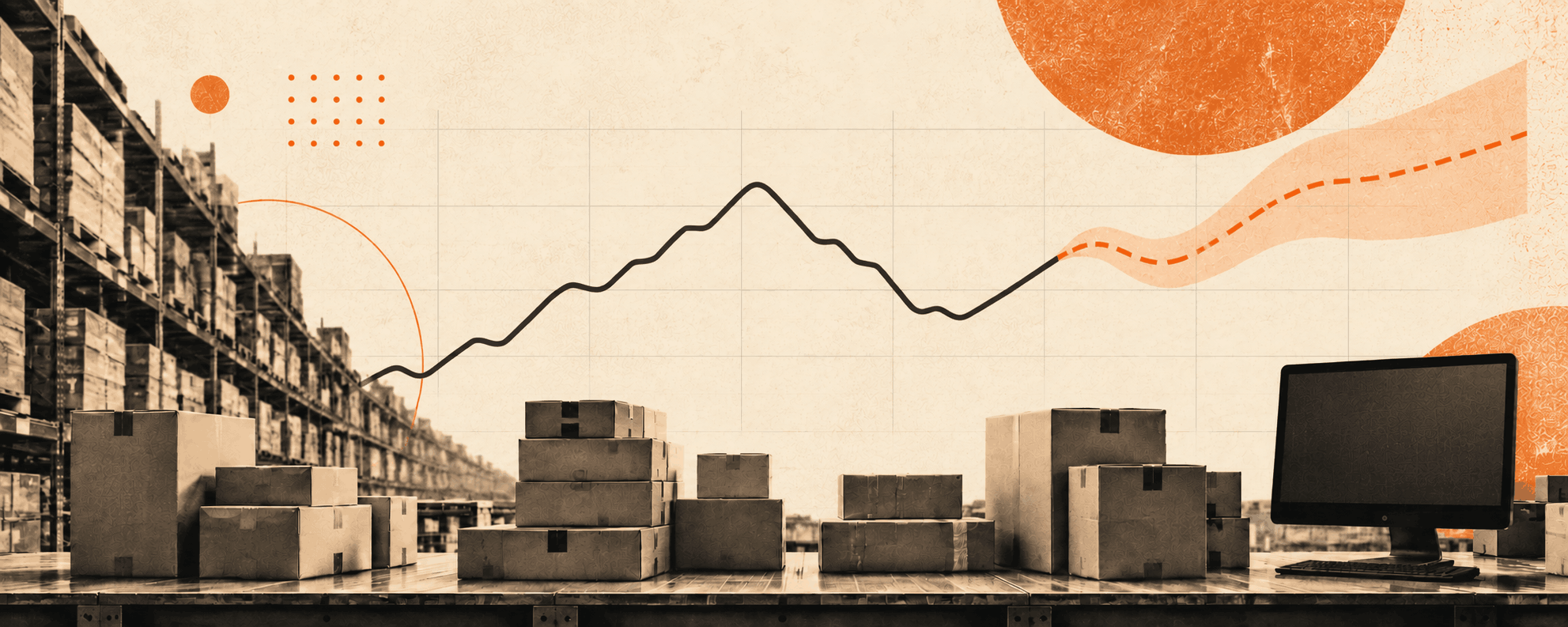
A container lands in the second week of October, and the building is already full. Not in a dramatic way, just full enough that pallets go wherever there is a gap, the aisles narrow, and the team spends the morning moving product to make room for other product.
Overflow warehousing solves that, fast, which is exactly why it tends to get treated as a purchase rather than a plan. What decides whether it works is not the extra building. It is which inventory you send there, and how fast it can come back. Keep reading our guide to discover how you can turn it into your brand’s best ally when drastic measures are called for.
TL;DR
- Overflow warehousing is temporary storage outside your main facility, switched on when that facility fills and given back when it clears.
- The usual triggers are a seasonal peak, a large inbound container, a product launch, or growth that arrived faster than the lease did.
- Send reserve depth and slow movers out, and keep anything with a chance of shipping today on the main floor.
- The setup lives or dies on replenishment: a trigger point at the pick face, a known lead time between buildings, and one person who owns the run.
- Splitting stock across two operators usually splits the inventory record too, which is where availability starts drifting.
- Budget for double handling, because every unit sent out gets touched on the way there and again on the way back.
What Is Overflow Warehousing?
Overflow warehousing is short-term storage outside your primary warehouse, used when that facility runs out of room. Most brands reach it through a third-party logistics provider or a short lease, hold the excess for a few weeks or a few months, and then hand the space back once volume settles.
What separates an overflow warehouse from simply renting more square footage is that it is meant to be temporary and reversible. You are buying room to get through a spike, not committing to a bigger footprint for the next five years. That distinction matters most at peak, when the alternative is signing a long lease against demand you have not seen yet.
It also explains why overflow usually sits with whoever already runs your 3PL fulfillment, since stock has to move between two buildings without becoming a separate project.
When Overflow Warehouse Storage Becomes Necessary
You rarely need a report to know. The signs show up on the floor first:
- Pallets parked in aisles, in front of racking, or anywhere with a gap.
- Stock in locations the system does not recognize, so finding it depends on who is working that day.
- Receiving backing up at the dock because there is nowhere to put anything away.
- Pickers spending more of the shift moving product than pulling orders.
A building past comfortable capacity is a slower building, since every one of those adds steps to a pick path. It is also less forgiving. According to the US Bureau of Labor Statistics, warehousing and storage recorded 4.8 injury and illness cases per 100 full-time workers in 2024; blocked aisles and unstable stacking are the conditions that push a number like that up. Overflow warehouse storage is worth arranging at the point where the main floor can no longer absorb another pallet, rather than a month after that.
What Belongs Out There, And What Never Should
The instinct is to send whatever sits nearest the door. The better rule is to sort by how likely something is to be picked today, and keep the main floor for anything that might be.
Keep on the main floor
- Fast movers and anything in an active promotion
- Short-dated lots that need watching
- Components for bundles being built now
- Anything with a marketplace clock on it
Send to overflow
- Bulk reserve beyond a few weeks of cover
- Slow movers and long-tail SKUs
- Retail case packs waiting on a purchase order
- Next season's stock and launch inventory
Launch stock is the clearest case in the second column (since it usually lands well before the date it is allowed to sell), and that gap is worth planning alongside the launch itself in brand and product development. Getting the sort wrong in the other direction costs more, because a fast mover sitting in the overflow building turns every order for it into a transfer request.
The Replenishment Line Is The Real Job
Once stock is out there, the only question that matters daily is how quickly a unit can get back to a picker. That takes four things, agreed before the first pallet moves: a trigger point at the main pick locations that says when to pull more forward, a known lead time between the buildings, a scheduled run rather than an emergency one, and a named owner.
Skip it and overflow becomes a place inventory goes to sit. The unit is in the system, but it is forty minutes away, which is not the same as being readily available. Records drift faster than most teams expect, too. Research in the Journal of Business Logistics, covering about 24,000 items at a large grocery retailer, found 64.7% had a gap between the recorded stock and what was actually on the shelf.
That was one operation counting its own stock. Add a second building run by somebody else, with separate counts and separate paperwork, and the gap has more places to open. Whatever your storefront promises has to be backed by units a picker can reach, which is where ecommerce store management meets a decision that looks purely physical.
What It Costs, And How To Set It Up
Overflow pricing looks simple and rarely is, because storage is the smallest line on it.
What you pay for
- Storage by pallet or square foot
- Handling in and out
- Transfers between buildings
- Minimums or a commitment period
Why it adds up
- The headline rate and the part everyone compares
- Charged twice, once in each direction
- Every run is a vehicle, a driver, and time
- Space held whether you fill it or not
Double handling is the real number. The cheapest quote per pallet can still be the most expensive arrangement once transfers are counted.
So the setup matters more than the rate. A self-storage unit is cheap and invisible to your systems. A second provider is capable and hands you a second inventory record to reconcile. Keeping overflow warehousing and logistics inside one operation avoids both.
At Merchdrop, we run our own buildings, and we have expanded our footprint repeatedly to stay ahead of client volume. That way, a second building is still one operation, one inventory record, and one team, rather than a relationship struck in November.
One Question Worth Answering Before You Book Anything
When your biggest inbound container lands in October, where exactly does it go? If the honest answer is that someone will find room, that is your actual plan for peak, and it is how pallets end up in the aisles by late November. Better to know now, while there is still a choice between arranging the space and improvising it.
Contact us to discuss your real peak needs, and we will prepare the best tailor-made plan for a successful surge period.
Ready To Find Out If Merchdrop Is A Good Fit?
The fastest way to find out whether we are a good match for your needs and growth plans is a short conversation, not a long form. Send us your numbers and we will come back with a quote within 24 hours.
FAQ
What is overflow warehousing, simply put?
Temporary storage outside your main warehouse, used when that warehouse is full. You move out the stock you are not about to pick, keep the space for as long as the spike lasts, and give it back afterward.
When should I arrange peak season overflow warehousing?
Before your inbound stock is booked, not after it lands. Space, labor, and transfer slots tighten at the same time in the fall, and the arrangement takes longer to stand up than most brands expect once inventory has to be mapped into a second location.
How is overflow warehousing different from renting a storage unit?
A storage unit holds boxes. Overflow warehousing holds inventory that stays in your system, gets counted, and can be pulled back into fulfillment on a schedule. The cheaper option usually moves the cost onto your own team, in hours spent driving, counting, and searching.
What does overflow distribution warehousing cost?
Expect a storage rate by pallet or square foot, handling charges in both directions, transfer runs between sites, and often a minimum. Compare totals rather than pallet rates, because handling and transport are where two quotes usually separate.
Can I still sell inventory sitting in overflow?
Yes, as long as those units stay visible in one inventory record and there is an agreed way to bring them forward. If overflow stock is invisible to your storefront, you will either oversell it or forget you own it.