For a direct-to-consumer brand, the delivery box is often the handshake, the only physical moment a customer shares with you. So the way an order is picked, packed, and delivered quietly decides whether they come back.
This guide covers what DTC fulfillment is, how it differs from traditional logistics and retail, the technology behind it, and how to sharpen what wins repeat customers. Read on to find out how you can streamline your DTC operation while maximizing your profits and customer satisfaction.
TL;DR
- DTC fulfillment is storing, picking, packing, and shipping the individual orders a brand sells straight to shoppers, with no retailer in between.
- It differs from both traditional B2B logistics and the retail model in volume, packaging, and who owns the customer.
- When choosing a provider, weigh scalability, technology, transparent pricing, and returns handling.
- Merchdrop runs all of it in-house from its own warehouse, shipping 200,000-plus orders a month.
What Is DTC Fulfillment?
So, what is DTC fulfillment, in plain terms? It’s fairly simple, actually: storing a brand's inventory, then picking, packing, and shipping each online order straight to the shopper, with no retailer or distributor in the middle. The brand owns the whole journey from purchase to doorstep - packaging, delivery speed, and data.
That control is the appeal, and it matters more with each passing year. Online buying is no longer a niche, and its share of US retail has climbed from under 1% in 1999 to roughly one in six retail dollars, according to Pew Research Center's analysis of Census figures. The catch is that the warehouse work is relentless, and many so-called 3PLs are brokers who pass it to whoever is cheapest. Merchdrop runs its own in-house 3PL fulfillment instead, from a warehouse it owns and staffs.
D2C Fulfillment vs Traditional Logistics
The gap between D2C fulfillment and traditional logistics is bigger than order size, and the direct channel is enormous: UN Trade and Development pegged global business-to-consumer e-commerce at around $4.9 trillion as far back as 2019. Traditional B2B logistics moves product in bulk, by the case or pallet, to another business; DTC flips that.
Direct To Consumer vs Retail
Underneath that operational gap lies a business-model choice: direct to consumer vs retail. In the retail model, you sell in bulk to a store that owns the shelf, the shopper, and much of the margin. Direct selling flips the sales strategy: you keep the margin, data, and relationship, but you inherit the fulfillment, returns, and support a retailer used to absorb.
The difference between direct to consumer and retail comes down to ownership, since direct means that every parcel (and every problem) is yours. Many brands run both. A 3PL that has the capacity and know-how to successfully tackle the two at the same time is a good starting point if you’ve reached that level.
The Technology Used In Modern D2C Fulfillment
The technology employed in modern D2C fulfillment is what keeps speed and accuracy from pulling against each other. The essentials:
- Real-time inventory visibility, backed by barcode scanning at every touchpoint, so nothing oversells.
- Platform integrations that sync orders across Shopify, Amazon, TikTok Shop, and other channels the moment a sale lands.
- Automation for routine steps like order release and carrier selection, to hold the line at peak.
- Returns reintegration, so sellable stock does not sit idle after a return.
- EDI and retail routing, for brands growing from online-only into wholesale and big-box.
Merchdrop runs this stack on a warehouse management system (WMS) with live dashboards and multi-carrier rate shopping across UPS, FedEx, USPS, and DHL, covering Amazon FBA prep, FBM, and TikTok Shop fulfillment. The same operation powers full e-commerce fulfillment for brands running their own store.
How To Improve Unboxing With D2C Fulfillment
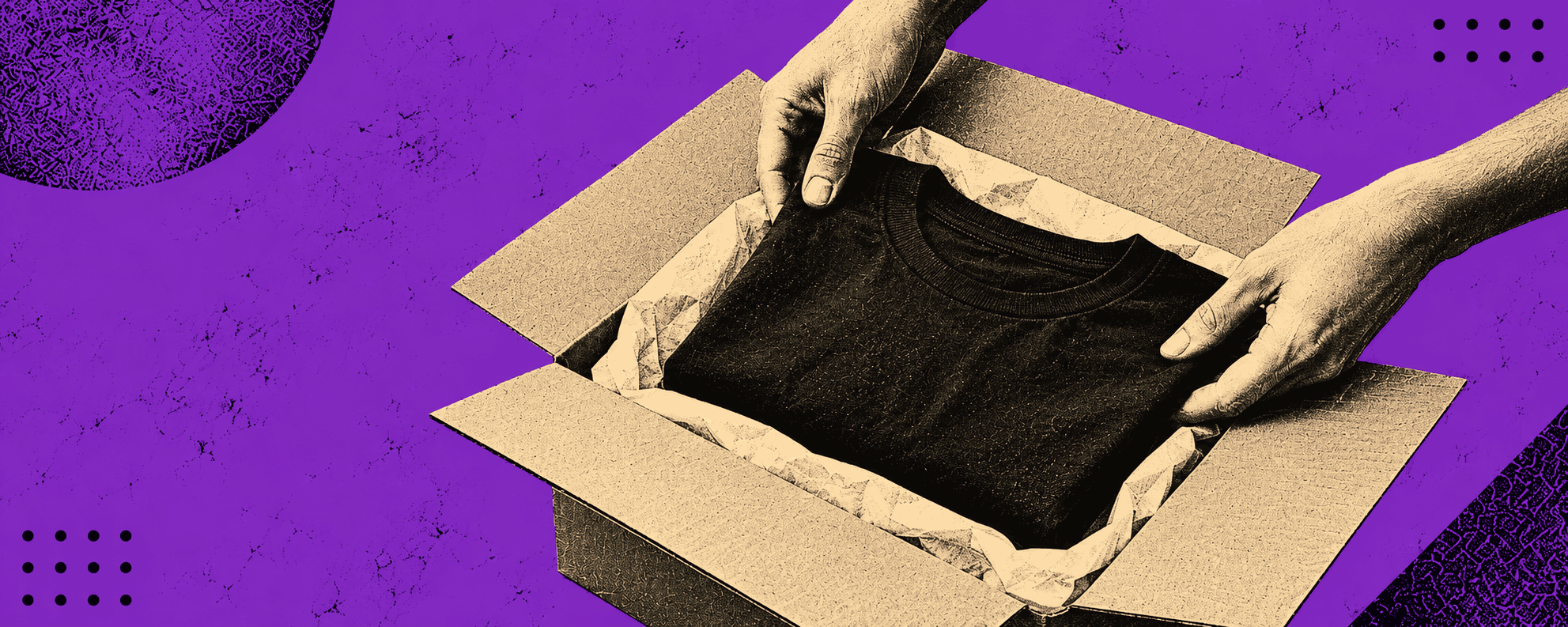
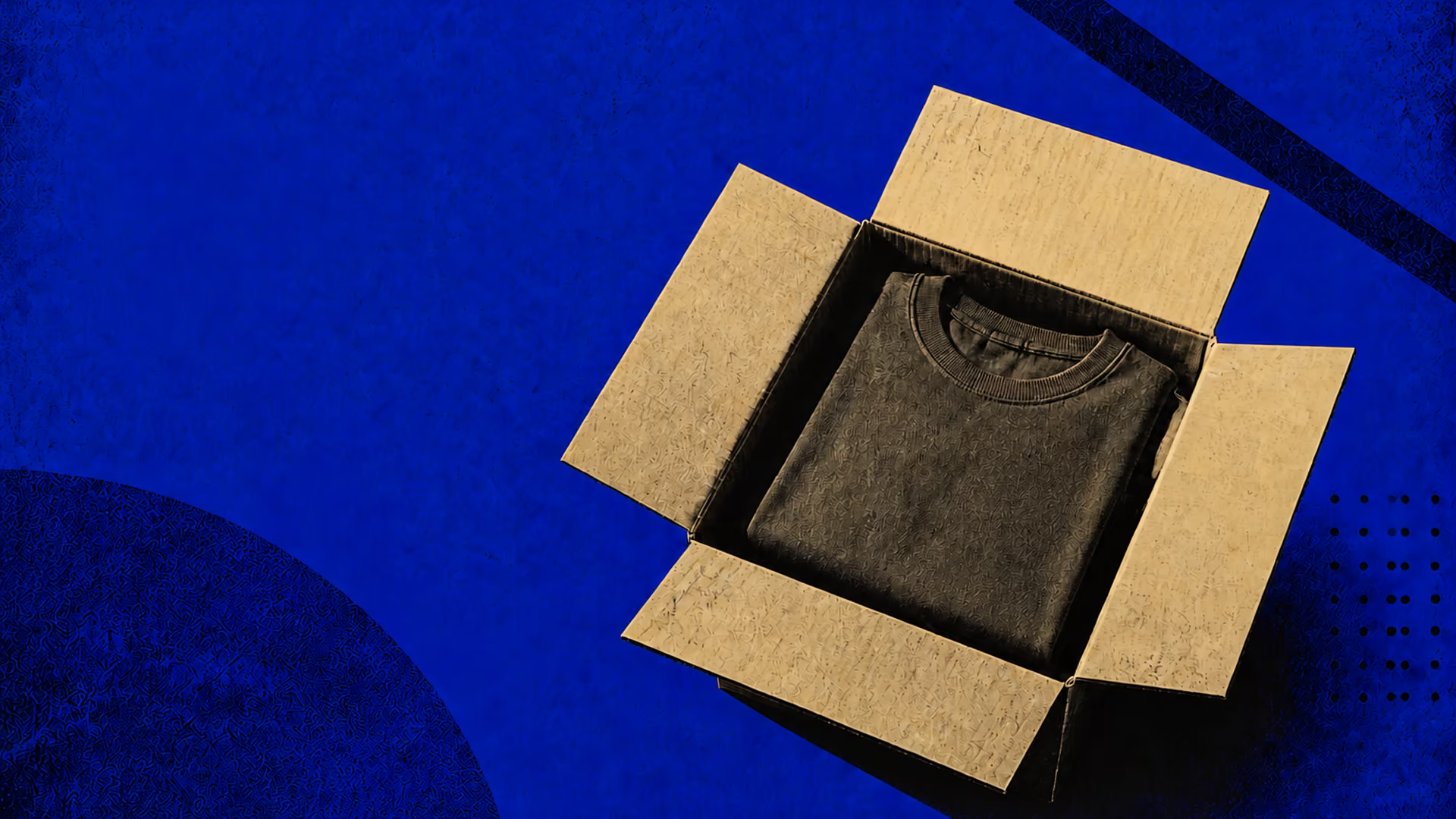
Since the parcel is often your only physical touchpoint, knowing how to improve unboxing with D2C fulfillment is worth getting right. A few best practices for unboxing in D2C fulfillment: right-size the box so the product is not swimming in void fill, add a branded insert, and keep the reveal consistent order after order. Doing that at volume without slowing the line comes down to kitting and disciplined pack stations.
How To Reduce Shipping Costs In D2C Fulfillment
Shipping is usually the largest line item on a DTC order, so learning how to reduce shipping costs in D2C fulfillment protects margin more than almost anything else. The D2C fulfillment strategies that are most effective work before the label prints: right-size packaging to avoid dimensional-weight penalties, rate-shop every parcel, and position inventory closer to customers to drop a shipping zone.
Accuracy matters too, since every mispick means paying postage on the same order twice. Handled well, those levers shave a real slice off every order without touching the customer's experience.
What To Look For In A D2C Fulfillment Provider
Knowing what to look for in a D2C fulfillment provider saves a costly switch later. Run this checklist before you sign:
Scalability and Locations
Can they absorb a sudden spike, and are they placed to reach your customers fast? Merchdrop ships from Chatsworth, California, with a Columbus, Ohio, center coming soon.
Technology and Integrations
Do they connect to your storefront, marketplaces, and back-office systems without manual workarounds?
Transparent Pricing
Storage, pick, and pack fees you can model, with no surprise line items.
Returns Handling
A defined inspect, restock, and report process, not a loose end.
Accuracy and Responsiveness
A track record of order accuracy and a real person who answers when something goes sideways. Merchdrop turns quotes around within 24 hours.
The Right Fit
Merchdrop is built for low-SKU, high-volume brands across beauty, personal care, home goods, and wellness.
Why Brands Choose Merchdrop For DTC Fulfillment
Merchdrop grew up handling merch for artists and creators, where the parcel is part of the show. Then, we scaled that care into full 3PL fulfillment services. Everything runs in-house, under one team, one system, and one point of accountability, across DTC, marketplaces, and retail.
Ready To Move From Cart To Shelf?
The hard part of a first retail account is not winning it. It is keeping it. Merchdrop preps, labels, palletizes, and ships to spec from a warehouse we own and staff, across 200,000-plus shipments a month. Let’s see your numbers, and you’ll get a quote from us within 24 hours.
FAQ
What is DTC fulfillment?
DTC fulfillment is storing a brand's inventory, then picking, packing, and shipping each online order straight to the customer, with no retailer in between.
What is the difference between direct to consumer and retail?
Retail sells in bulk to a store that resells to shoppers; direct to consumer ships straight to the buyer. With DTC you keep the margin, data, and relationship, but you own fulfillment, returns, and support.
How can you reduce shipping costs in D2C fulfillment?
Right-size packaging to avoid dimensional-weight penalties, rate-shop carriers on every parcel, position inventory near your customers, and keep pick accuracy high so you are not paying postage twice.
What are some best practices for pristine unboxing in D2C fulfillment?
Use a right-sized box, add a branded insert, and keep presentation consistent at volume through kitting and disciplined pack stations.
What should I look for in a D2C fulfillment provider?
Scalability, warehouse locations near your customers, platform integrations, transparent pricing, and a clear returns process. A provider that owns its warehouse gives you one accountable team.