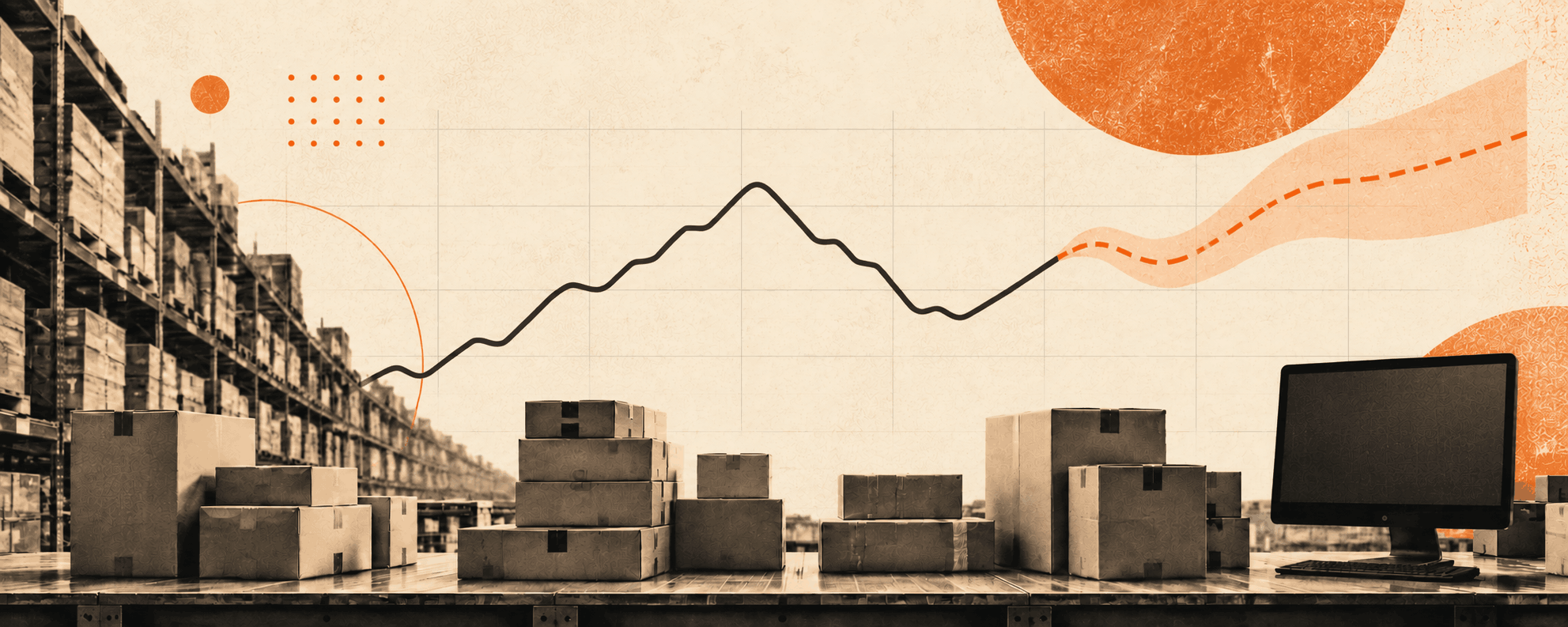
Most product businesses hit the same wall exactly once. Orders are climbing, the spare unit is full, and two people are packing boxes at eleven at night to keep the promise your checkout page made. Somewhere around the two hundredth box, the question stops being how to ship faster and becomes what is third party logistics, and who can take this off my hands.
A 3PL solves that. The catch is that 3PL is a broad label, and two companies using it can work in completely different ways. You find out which kind you hired during your busiest week. This guide will help you discover which type of 3PL suits your brand.
TL;DR
- 3PL means handing warehousing, inventory, picking, packing, shipping, and returns to an outside specialist.
- The split that matters: some 3PLs arrange the work and pass it along, others operate the warehouse themselves.
- The best fits are brands with low SKU counts, high order volume, and demand that arrives in waves.
- Merchdrop owns and staffs its own facilities, so the people packing your orders work for the company you signed with.
What Is 3PL Logistics? The Short Answer
A third party logistics provider stores your inventory and ships orders to your customers, so you are not running a warehouse alongside the business you meant to build. The name is literal: you are the first party, your customer the second, and the specialist in between the third.
That middle layer is not a specialized service reserved for the very few. US warehousing and storage employs roughly 1.8 million people across about 23,700 private facilities, according to the Bureau of Labor Statistics. A whole sector exists because running a warehouse well is harder than it looks.
The 3PL Handoff, Step By Step
- Your product finishes production.
- Freight moves it to the 3PL’s warehouse.
- The warehouse receives it, counts it, and logs it into stock.
- Your store connects to their system, and orders flow in automatically.
- The team picks and packs each order.
- A carrier collects and delivers it.
Step four is the one brands often underestimate. 3PL fulfillment services that already integrate with your platform save weeks of work.
The 3PL Third Party Logistics Business Model: Arranged Or Operated?
Most explanations stop at “outsourcing.” The better question is who owns the building your inventory sits in.
Some providers arrange logistics. They quote you, then place your work in someone else’s facility, run by someone else’s staff. It buys reach quickly, and a big part of the industry works this way.
Others operate logistics. They own the warehouse, employ the people in it, and run the software behind it. When something goes wrong, there is no go-between.
Merchdrop operates its own fulfillment and brokers everything else on purpose. We run our warehouse in Chatsworth, California (with a new facility in Columbus, Ohio, coming soon), but own no printing equipment and no trucks, because a vendor network beats ownership on price and routing. Our business mindset revolves around owning the part where mistakes reach your customer and brokering the part where a network wins.
What Is A 3PL Company Responsible For?
The role of a third party logistics company covers everything between “the product exists” and “the customer has it.”
There is a compliance angle here that rarely gets mentioned. Under the FTC’s Mail, Internet, or Telephone Order Merchandise Rule, a seller that states no shipping time must have a reasonable basis to believe it can ship within 30 days, and if it cannot, it must notify the customer and either get consent or refund. Your provider’s reliability is part of your legal footing, not just your customer experience. Worth remembering before you compare e-commerce order fulfillment quotes on price.
3PL Examples: What Third Party Logistics Looks Like In Practice
Here is where third party logistics shows up in practice.
The Creator Brand With Six SKUs And A Launch Calendar
A quiet week means a few hundred orders. A drop means 10,000 in a day. This brand needs staffing elasticity, not shelf space.
The D2C Brand Moving Into Retail
Everything works online until a buyer asks for electronic data interchange (EDI), routing guides, and compliant labeling. Most providers cannot handle it, so the brand ends up with two vendors and two inventory pools. Merchdrop runs wholesale and D2C out of the same building, handling both operations under one roof and one system.
The Touring Artist
Merch on the road and merch online are usually handled by separate companies. Running both is unusual, and it is where Merchdrop started.
When You Actually Need a Third Party Logistics Provider
The signals are rarely subtle. It would be a good idea to start looking for a 3PL partner if you notice any of the following:
- Founders or senior staff are packing boxes.
- Storage costs rise faster than order volume.
- Stock counts never quite reconcile.
- A launch slipped because you could not ship fast enough.
- Everyone quietly dreads Q4.
At this point, it’s worth mentioning what does not fit. A 3PL is the wrong move if you carry a high SKU count with low volume per SKU, if every order needs custom assembly, or if account minimums outweigh the savings. What works best: low SKU count, high volume, and demand that arrives in waves.
The Merchdrop Approach To 3PL
Built For Spikes
We came out of tour merch and creator drops, where a month of volume lands in 48 hours. Peak is the design assumption, not the exception.
One Team Across Every Channel
D2C fulfillment, Amazon prep, TikTok Shop, wholesale EDI, and returns run from one warehouse on one WMS, with integrations across most store platforms.
Operators Where It Counts
We own the fulfillment operation, while brokering production and freight by design.
Two Sites, Right-Sized
A warehouse in Chatsworth, California, with a new facility in Columbus, Ohio, coming soon to sit nearer major shipping hubs.
Ready To Find Out If Merchdrop Is A Good Fit?
The fastest way to find out whether we are a good match for your needs and growth plans is a short conversation, not a long form. Send us your numbers and we will come back with a quote within 24 hours.
FAQ
What is a third party logistics provider in simple terms?
An outside company that stores your products and ships them to your customers. You are the first party, your buyer the second, and the specialist the third.
How is a 3PL different from a 4PL or a freight forwarder?
A 3PL executes the work. A 4PL oversees your whole supply chain, including the 3PLs inside it. A freight forwarder only moves cargo between countries and handles customs. Most growing brands need the 3PL long before the others.
How much does a 3PL cost?
Standard pricing has four parts: a storage fee, a pick fee, a pack fee, and per-item fees on multi-item orders. Merchdrop will build a single blended rate on request.
What should I look for in a 3PL company?
Who owns the warehouse, whether their system integrates with your store, which channels they cover, what their plan is for your peak, and how fast they quote.