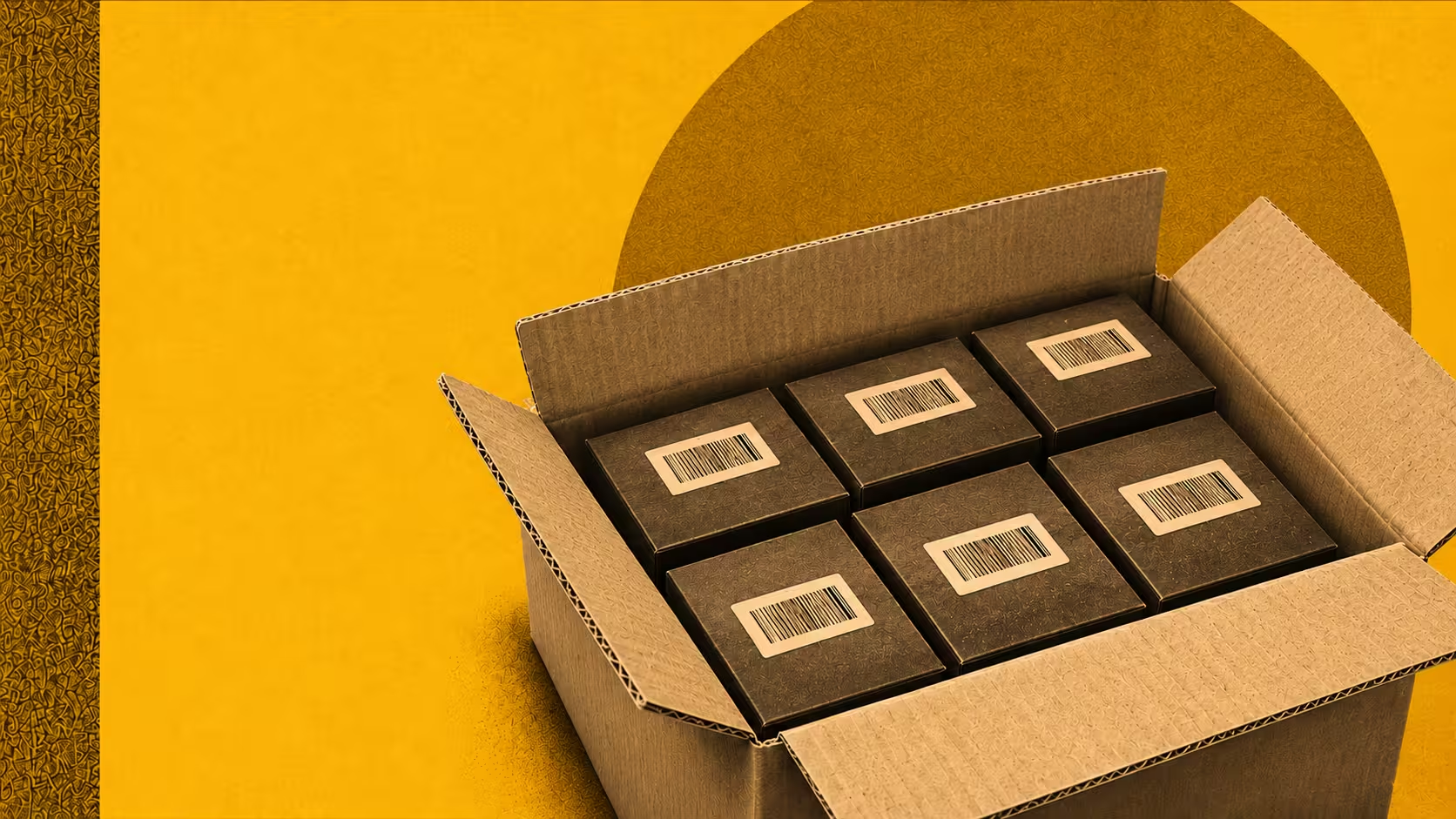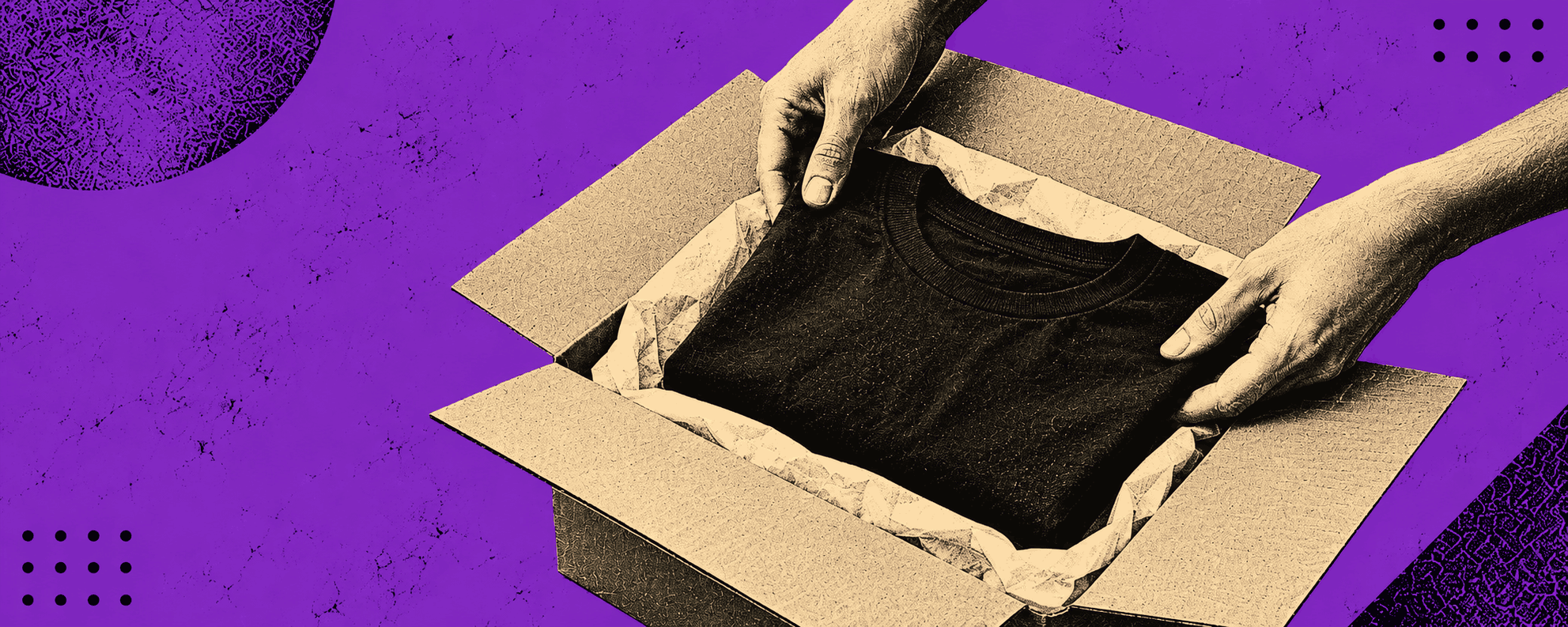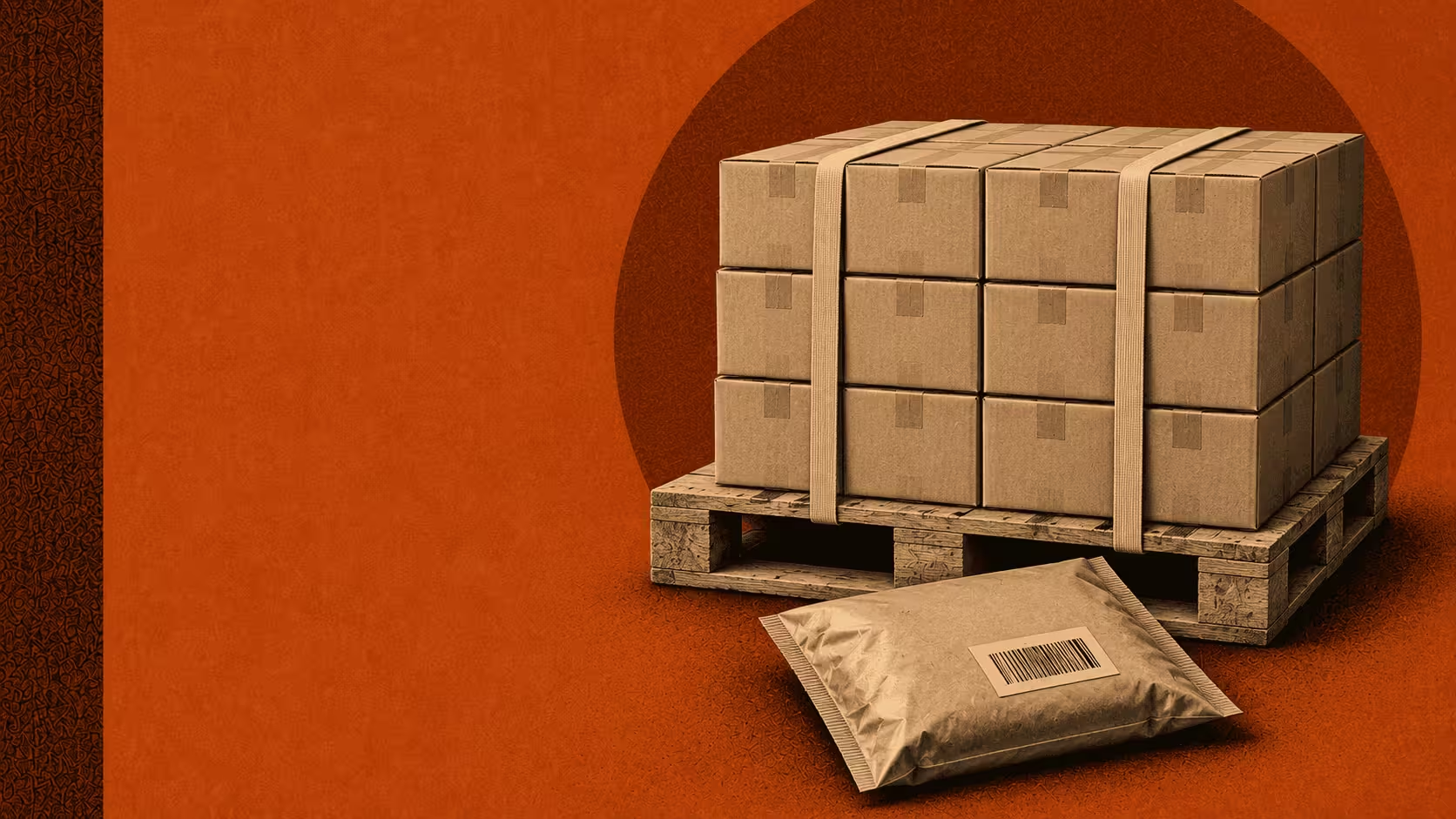
A brand that sells through its own website keeps the full price of every order, but also pays for everything that happens before and after it. By contrast, one selling into retailers gives up part of that price in exchange for orders that arrive by the case and customers it never had to find.
Neither model takes the difficult work away. Each one only changes who does it, and the direct to consumer vs wholesale choice shapes your margins, your cash, and what your warehouse spends its days doing.
TL;DR
- Direct to consumer (DTC) means selling straight to shoppers through channels you control. Wholesale means selling in bulk to retailers or distributors, who then sell to shoppers.
- DTC keeps the full retail price, but that price has to cover ads, the storefront, single-parcel shipping, and returns. Wholesale starts at a lower price per unit and hands many of those costs to the retailer, so compare what is left per unit rather than the price itself.
- DTC money arrives at checkout, while wholesale payment follows the retailer’s invoice terms and can come weeks after delivery. Growing wholesale therefore takes more working capital.
- Every DTC order comes with customer data you can use. In wholesale, the customer relationship belongs to the retailer.
- In the warehouse, DTC means many small parcels picked unit by unit. Wholesale means full cases and pallets, labeled and documented to each retailer’s rules.
- A small business usually does best starting where its buyers already shop. Brands that run both channels should set stock, promotion, and exclusivity rules before the two collide.
How Each Model Works
In a direct-to-consumer model, the brand sells through channels it controls, such as its own online store, a social storefront, or its own retail locations. The shopper pays the brand, which handles the order from checkout to doorstep, usually through direct-to-consumer fulfillment that ships one order at a time.
In a wholesale model, the brand sells larger quantities to a business buyer at a lower price. The retailer adds its own margin, puts the product on its shelves or website, and takes care of the end customer.
Direct To Consumer vs Wholesale Model Differences
What The Price Has To Cover
A DTC sale captures the full retail price, but that price has to cover ads, the storefront, payment fees, packing, postage, and returns. A wholesale sale starts lower, since the retailer needs room for its own margin, yet many of those costs move to the retailer. Price alone flatters DTC, so compare what is left per unit once every cost of reaching the buyer is paid.
When The Money Arrives
A shopper pays at checkout, often before the order has even been picked. A retailer pays when the agreed invoice terms say so, which can be weeks after the goods arrive. By then, you have already paid for production and freight. Wholesale growth therefore needs working capital that DTC growth does not.
Who Knows The Customer
Every DTC order comes with a name, an address, and a purchase history, all of which feed product decisions and repeat sales. Wholesale customers belong to the retailer. You see sell-through numbers if the retailer shares them, but rarely the person behind the purchase.
What Leaves The Warehouse
DTC means thousands of small parcels, each one picked unit by unit, packed, and labeled for a home address. That work rewards fast, accurate pick and pack services. Wholesale means fewer, larger shipments of full cases or pallets, labeled and documented to the retailer’s rules, often with order data exchanged through EDI (electronic data interchange).
Wholesale vs Direct To Consumer Sales Comparison: Pros and Cons
Where DTC Comes Out Ahead
- Higher revenue per unit
- Full control over pricing, presentation, and the unboxing
- Firsthand customer data and quick feedback on new products
- Payment collected up front
What Wholesale Does Better
- Instant access to the retailer’s shoppers and foot traffic
- Large, predictable orders that are cheaper to ship per unit
- Less spending on marketing and customer service
- The credibility of a shelf in a known store
Sports Brand Direct To Consumer vs Wholesale: What Nike’s Results Show
Sportswear shows how hard it is to pick one side. Nike sells through its own stores and apps (NIKE Direct) and through wholesale accounts. In fiscal 2026, wholesale revenues were $27.5 billion, up 6%, while NIKE Direct revenues fell 6% to $17.7 billion, according to the company’s results filed with the U.S. Securities and Exchange Commission (SEC).
For smaller brands, the point is not the size of those figures. What stands out is that a brand with every resource to sell direct still earns most of its revenue through wholesale accounts, and that share grew in fiscal 2026.
Small Business Wholesale vs Direct To Consumer: Where To Start
For a small business, the better first channel is usually the one closest to where its buyers already are.
- Start with DTC if you already have an audience, such as a creator following or an email list, or if you want to test variants before committing to large runs.
- Lead with wholesale if your category is bought in stores, if shoppers need to see or try the product, or if you can supply in volume but have little budget for ads.
Finding buyers is the hard part either way. Among small US employer firms surveyed in 2025, reaching customers and growing sales was the most commonly reported operational challenge, according to the Federal Reserve Banks’ Small Business Credit Survey. DTC pays for every one of those customers, while wholesale borrows a retailer’s.
Running Both Without The Channels Colliding
Many growing brands end up running both. The friction usually comes from three decisions worth making in advance:
- Who gets the stock when it runs short. If a retail order for 3,000 units lands while your website is selling 500 a week, decide whether confirmed purchase orders are set aside first or online demand gets a floor that wholesale cannot touch.
- How promotions line up. A website sale that undercuts your retailers’ shelf prices strains the relationship quickly. Share a promotions calendar with wholesale buyers.
- What is exclusive to each channel. Bundles, colors, or pack sizes sold only online give shoppers a reason to buy direct without undercutting retail partners.
The warehouse side needs planning too. Wholesale adds work a parcel operation never needed: case packing, pallet building, carton labels, and order data exchanged via EDI. A 3PL fulfillment center in the USA that already handles both from one floor lets you say yes to a first retail order without setting up a second operation.
Keep Both Channels Within Reach
Which model is right will likely change as the brand grows. A creator brand may begin with DTC drops and receive its first retail order a year later. A brand built on wholesale may later want a website of its own. The channel decision should stay a business decision, not something your fulfillment setup decides for you.
Merchdrop packs DTC parcels and ships wholesale orders from its own Chatsworth, California, warehouse, with EDI live for retail accounts, including Target. If you are weighing which channel to add next, talk it through with the Merchdrop 3PL team.
Ready To Find Out If Merchdrop Is A Good Fit?
The fastest way to find out whether we are a good match for your needs and growth plans is a short conversation, not a long form. Send us your numbers and we will come back with a quote within 24 hours.
FAQ
What is the main difference between direct to consumer and wholesale?
Direct to consumer sells straight to the end customer at full retail price. Wholesale sells in bulk to a retailer or distributor at a lower price, and that business sells to the end customer.
Is DTC more profitable than wholesale?
Not automatically. DTC earns more per unit, but it also pays for marketing, customer service, single-parcel shipping, and returns. The answer depends on the profit margin left after those costs.
Can a brand sell both DTC and wholesale?
Yes, and many do. It works best with clear rules on pricing, promotions, channel-exclusive products, and stock allocation when supply runs low.
Which model is better for a new small business?
Start where your customers already shop. An existing audience points to DTC, while a product people want to see in a store favors wholesale.